What M Shed Reveals About Bristol’s Industrial History
M Shed’s cargo cranes, fireboat and tug reveal how Bristol’s harbour worked, whose skills kept goods moving and how local people saved its machinery.
Published
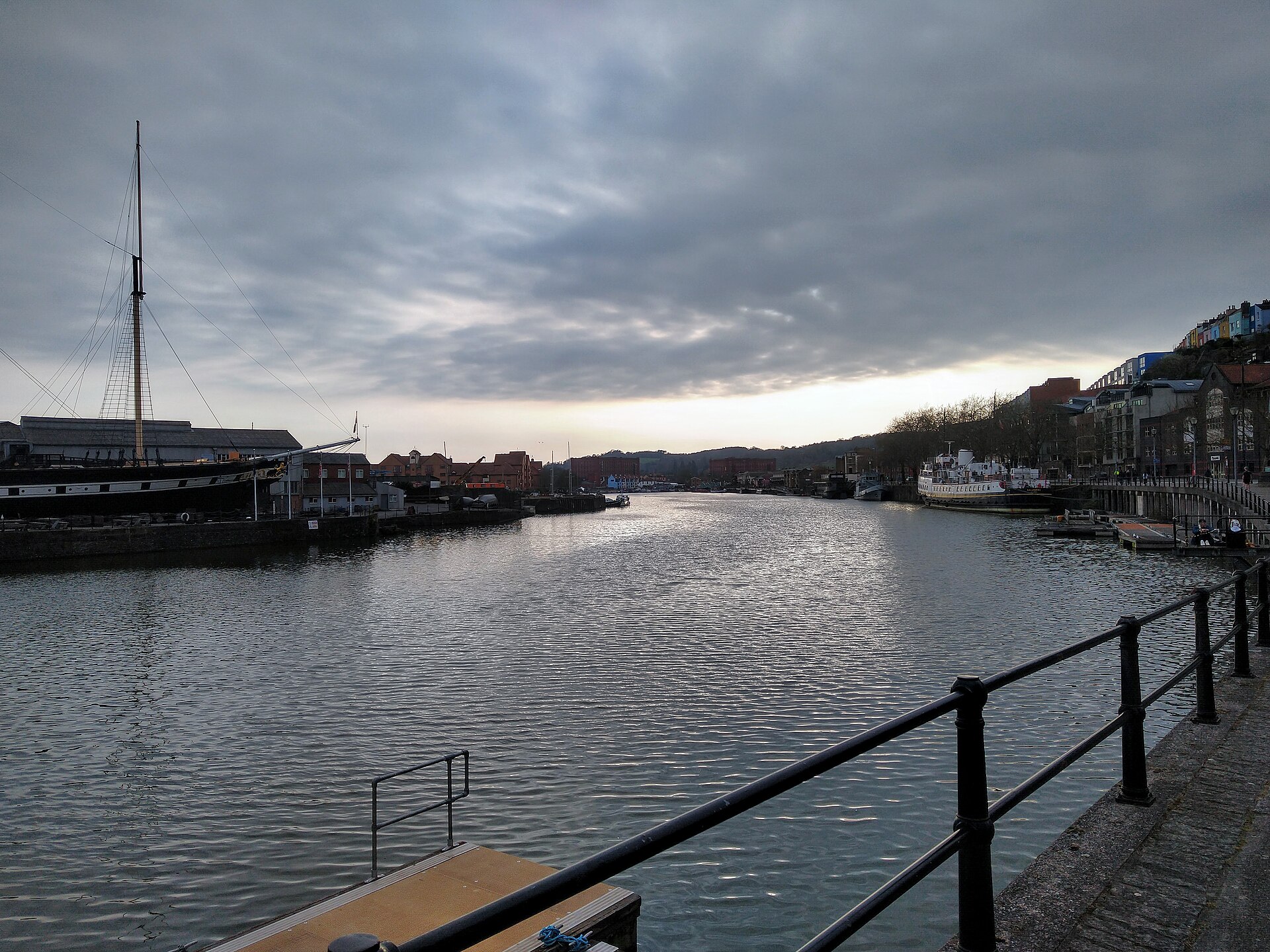

Bristol’s industrial history becomes easier to understand when you follow a cargo through the harbour. At M Shed, the museum’s surviving cranes and boats reveal the connections between ships, warehouses, transport and people. Start with the electric cargo cranes outside, then consider the fireboat Pyronaut and tug John King: each exposes a different part of the working port.[3][4]
Start With the Cargo Cranes
The cranes belonged to a carefully organised cargo-handling system. Built in 1951 by Bath crane manufacturer Stothert & Pitt, they formed part of a group of eight serving the L and M transit sheds. Their first cargo arrived in April 1952. The sheds provided temporary storage, while goods could also move directly between ships and railway wagons or road transport.[4]
Think about those connections when looking at the waterfront. The crane lifted the load, but its destination might be a shed, a wagon or a vehicle. M Shed’s account identifies butter, beer, tractors, newsprint, paper pulp and timber among the cargoes handled here. That mixture connects the wharf to food supplies, farming, publishing and manufacturing, giving you several ways to understand what the harbour meant beyond the water’s edge.[4]
There’s also a wartime break in the story beneath this post-war machinery. Bombing destroyed the old corporation granary on the site, creating space for the new general cargo wharf. The cranes therefore belong to a particular rebuilding of the docks, rather than representing every period of Bristol’s maritime past.[4]
The Machinery Ran at the Dockers’ Pace
A useful question to bring to the cranes is why most originally lifted only two tons. Bristol Museums’ history explains that cargo was packed in quantities people could move by hand. Crane capacity reflected how much a gang could handle while the crane delivered a load and returned for another. Seven of the original eight cranes were later upgraded to three tons, while No 32 could lift ten.[4]
Speed depended on skill as well as machinery. Drivers operated the lifting and turning movements while watching the hook, neighbouring cranes and the men below. They stood at the controls during an eight-hour working day, with breaks. Because dockers were often paid according to the amount they moved, a slow driver could reduce their earnings.[4]
The employment figures need their geography kept intact. The museum describes up to 2,000 men employed casually on a given day across the city docks and Avonmouth together. That figure cannot be assigned to the quayside outside M Shed alone. It does show how much human labour sat behind the port’s mechanical equipment.[4]
Pyronaut and John King Reveal the Harbour’s Other Work
Cargo handling required protection and assistance. Pyronaut, a fireboat built in Bristol in 1934, worked from the Prince Street Bridge river police station with a three-person crew, including an engineer in the engine room. During the Bristol Blitz in 1940, the boat faced fires among warehouses, factories, shops and homes around the Floating Harbour.[3]
That history brings the waterfront’s workplaces and neighbouring homes into the same account. A fireboat’s work crossed those boundaries when air raids damaged the area. Reading Pyronaut alongside the cranes adds the people protecting the port to the people moving its goods.[3][4]
John King, a tug built in 1935, explains another practical difficulty: getting cargo ships between the city docks and the mouth of the Avon. Ships carrying goods including paper pulp and sherry needed help around the river’s dangerous bends. The tug’s later decline also records a change in work. As city-dock trade fell and motor ships relied less on tugs, its workload dwindled.[3]
Why Four Cranes Survived
The objects also reveal decisions about what Bristol should keep. M Shed’s cranes handled the last Baltic trader to visit the port in November 1974. Their power was subsequently cut, and four of the eight cranes serving the sheds were sold for scrap.[4]
Local people formed the pressure group City Docks Ventures to save the survivors. The group bought two back from a scrap merchant, and Bristol City Council bought the other two. Their survival gives campaigning residents a place in this industrial history alongside manufacturers, drivers and dockers. The cranes standing outside the museum are evidence of that choice as well as their earlier working lives.[4]
Plan Around the Objects That Interest You
For a focused visit, use the cranes to investigate cargo handling, Pyronaut to consider fire protection and John King to understand river towage. Seeing an exhibit and taking a trip aboard it are separate arrangements. M Shed’s working-exhibits page directs visitors to its programme for operating occasions, so check the particular activity before travelling.[3][4]
Bristol Museums’ visit information, checked on 20 October 2026, requires advance booking for school and group visits. If an object prompts a question about a workplace or family connection, Bristol Museums & Archives also provides a museum collection search and an archive catalogue covering Bristol and surrounding areas. Carry a specific name from the exhibit into that search and see where it leads.[1][2]
Sources and checks
These sources were used for this article. Availability, prices and service details can change after the stated check date.
- Bristol Museums
Checked 20 October 2026.
Bristol Museums & Archives provides a museum collection search. The Bristol Archives catalogue covers Bristol and surrounding areas.
- Plan your visit | Bristol Museums
Checked 20 October 2026.
The visit information retained on 20 October 2026 requires advance booking for school and group visits to M Shed.
- The Working Exhibits | M Shed
Checked 20 October 2026.
Pyronaut was built in Bristol in 1934 and worked from the Prince Street Bridge river police station. Pyronaut had a crew of three, including an engineer in the engine room. Pyronaut fought fires during the Bristol Blitz in 1940 around the Floating Harbour. John King was built in 1935 to tow cargo ships between Bristol City Docks and the mouth of the Avon. Cargo ships needed assistance around dangerous river bends. Declining trade and reduced reliance on tugs diminished John King’s workload. The operator provides separate information about forthcoming boat trips.
- M Shed's cargo cranes | Bristol Museums
Checked 20 October 2026.
Stothert & Pitt of Bath built the cranes in 1951 as part of a group of eight serving the L and M transit sheds. Bomb damage to the corporation granary preceded construction of the new general cargo wharf. Cargo could pass through transit sheds or directly to railway wagons and road transport. Documented cargoes included butter, beer, tractors, newsprint, paper pulp and timber. The cranes first unloaded cargo in April 1952. Seven cranes originally lifted two tons and were later upgraded to three, while No 32 could lift ten. Crane capacity reflected the quantities dockers could handle manually. Up to 2,000 casual workers were employed across the city docks and Avonmouth together on a given day. Crane drivers worked eight-hour days with breaks, and their speed could affect dockers’ earnings. The cranes handled the last Baltic trader in November 1974 before their power was cut. Four of the original eight cranes were sold for scrap. City Docks Ventures bought back two surviving cranes and Bristol City Council bought the remaining two.